



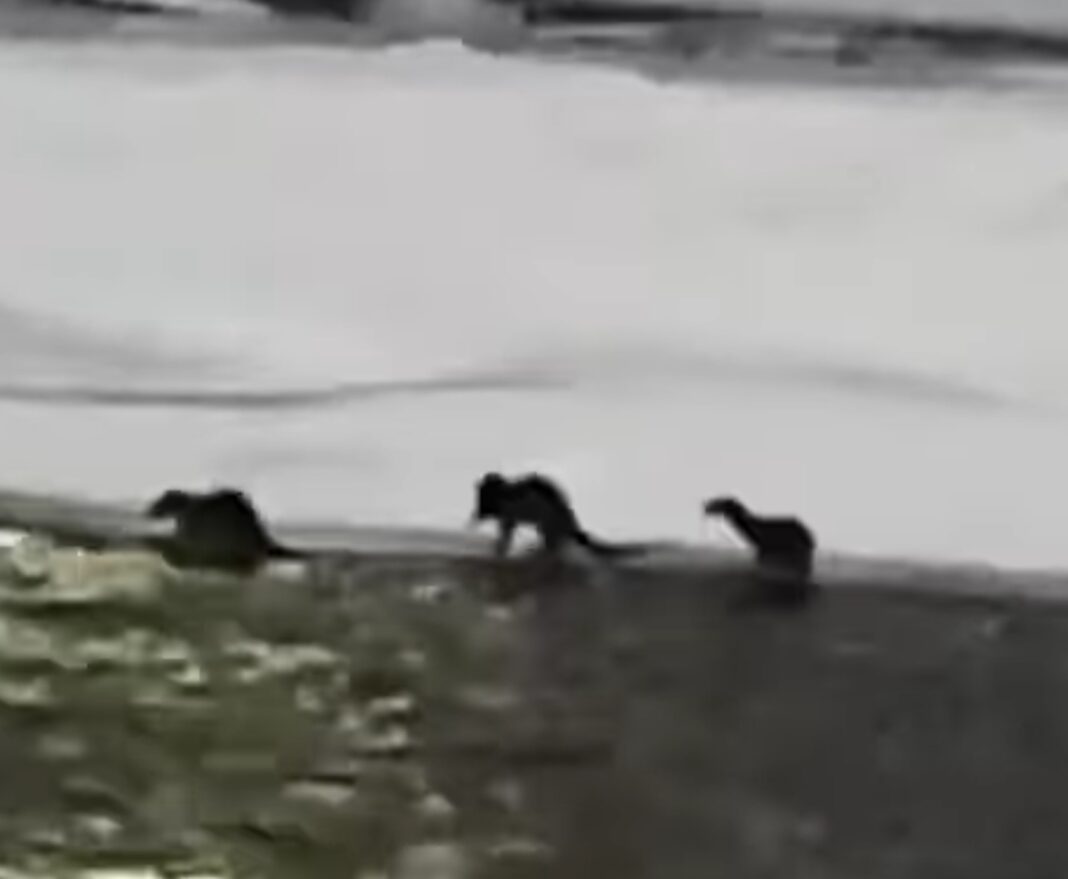

Bandipora, Jan 30: The elusive Eurasian otter has been spotted in the Gurez Valley of North Kashmir’s Bandipora district after years.
Once thought to be nearly extinct in the area, the sightings suggest a revival of the species and a healthier aquatic ecosystem.
The latest evidence comes from camera traps set up by the wildlife department, capturing images of the otters along the Kishanganga River near Dawar Tehsil of the border valley.
An official told Rising Kashmir that while they were aware of the otters’ presence, capturing them on camera has been rare.
The first documented sighting in recent times occurred in August 2023, when researchers studying the Kashmir musk deer inadvertently recorded images of two Eurasian otters near Tarbal, close to the Line of Control.
Wildlife Warden North Kashmir, Intesaar Suhail told Rising Kashmir that this is not the first time they have seen Eurasian otters in the Gurez Valley.
In 2023, a research project by SKUAST-Kashmir and Aligarh Muslim University (AMU) had set up camera traps in the same location, which also captured evidence of their presence, he said.
Inresaar said that the Eurasian otter was once very common in Kashmir, about 20-25 years ago. However, its sightings have become rare over the years due to various pressures on its habitat.
“Although Eurasian otters are commonly found outside Kashmir, their presence in the valley had almost been presumed extinct. This recent sighting can be seen as a rediscovery of the species in this area,” he added.
He also said that over the past three years, there have been multiple reports of Eurasian otter sightings across Kashmir. It was also spotted in Ladakh about 10-15 years ago, which indicates that the species has a wider range than previously thought.
“The sighting of Eurasian otters in Gurez is significant because of how rare they have become. Their presence is an encouraging sign for the area’s aquatic ecosystem, and we hope to see more of them in the future,” he added.
Historically, Eurasian otters thrived in various aquatic habitats across the Indian subcontinent, including highland and lowland lakes, rivers, streams, and marshes.
In the Himalayas, they have been known to ascend up to 3,660 meters during the summer months. However, over the past three decades, their numbers have dwindled due to habitat loss, pollution, and human disturbances.
The Eurasian otter is currently listed as “Near Threatened” on the IUCN Red List, primarily due to habitat destruction and pollution.