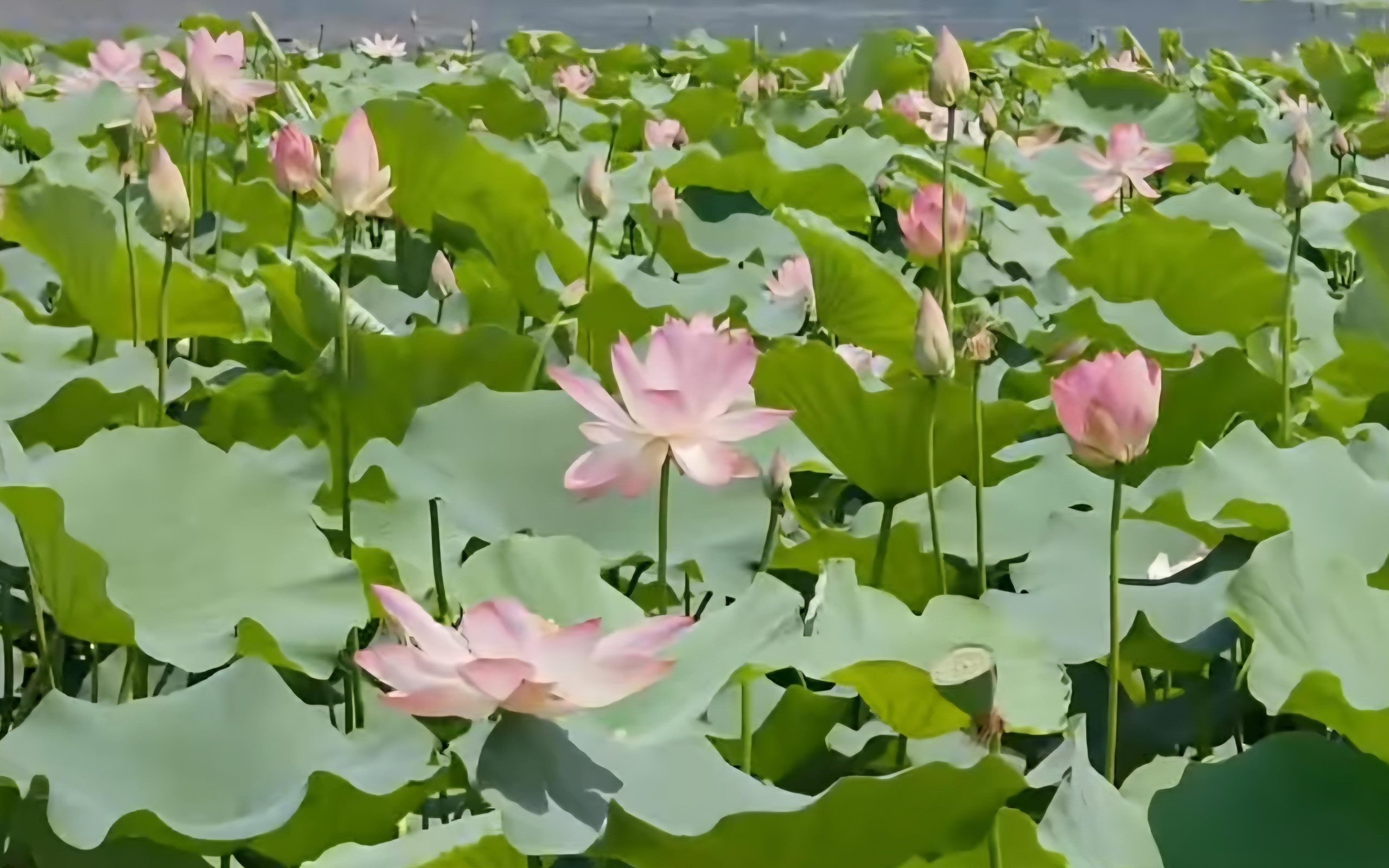
Bandipora, July 9: The Wular Lake in North Kashmir has witnessed the blooming of lotus flowers, locally known as “Nadru”, after a gap of nearly 25 years, a milestone in the lake’s ongoing restoration efforts.
The rare sight of vibrant lotus blooms was spotted in the waters of Wular, one of Asia’s largest freshwater lakes, located in Bandipora district.
An Official from the Wular Conservation and Management Authority while confirming the development, attributed the return of Nadru to sustained dredging operations and ecological restoration measures taken over the past few years.
“The revival of Nadru in Wular is the result of large-scale dredging and de-siltation that helped clear years of accumulated soil and organic debris,” the WUCMA official added. “The department also undertook controlled sowing of Nadru seeds, about 20 to 30 percent of what naturally occurs to support regrowth.”
For nearly three decades, Wular Lake faced severe ecological stress due to unchecked siltation, pollution, and encroachments. The excessive deposition of soil and organic waste blocked sunlight penetration in the waterbed, disturbing the aquatic ecosystem and halting the natural growth of water plants like lotus.
Human activities such as illegal construction, sand extraction, and unregulated agricultural runoff also damaged the lake’s health. By the early 2000s, the lake had significantly shrunk in size and lost much of its natural biodiversity, including the seasonal bloom of Nadru.
WUCMA, under the aegis of the Jammu and Kashmir Government, launched a conservation plan for Wular, which included dredging clogged channels, removing silt, curbing encroachments, and replanting native aquatic vegetation. These efforts, intensified in the last 3-4 years have led to improved water quality and ecological restoration.
“We observed early signs of Nadru growth last year, but this season has shown a more promising bloom,” rhe official said. “This is not just an ecological success but also an economic opportunity for local communities,” he added.
The official further said that the blooming of lotus in Wular is more than just an aesthetic sight as it is expected to rejuvenate the local economy.
Nadru is a popular delicacy in Kashmiri cuisine and sells for Rs 250 to 300 per kilogram in local markets, he said adding that its return offers fresh hope for scores of families living around Wular who rely on seasonal lake produce for livelihood.
Local residents residing around the wular lake have welcomed the development with enthusiasm, seeing it as both a return of natural beauty and a path to improved earnings.
They said that the blooming of Nadru is a key indicator of improving lake health and biodiversity. Continued conservation efforts, they say, will be crucial to ensure that such ecological recoveries are sustained.
Wular, one of the largest freshwater lakes in South Asia, fed mainly by the Jhelum River. Designated as a wetland of international importance under the Ramsar Convention, it plays a vital role in flood control, water purification, and biodiversity conservation in the Kashmir Valley.
Over the years, however, Wular had come under threat due to rampant siltation, encroachments, and lack of management. The recent revival of Nadru signals a possible turning point in the lake’s fragile ecological journey.