Category: Development

  • B’pora’s Kishanganga Power Station sets new record, crosses 1,506 MUs

    B’pora’s Kishanganga Power Station sets new record, crosses 1,506 MUs

    Highest output since commissioning

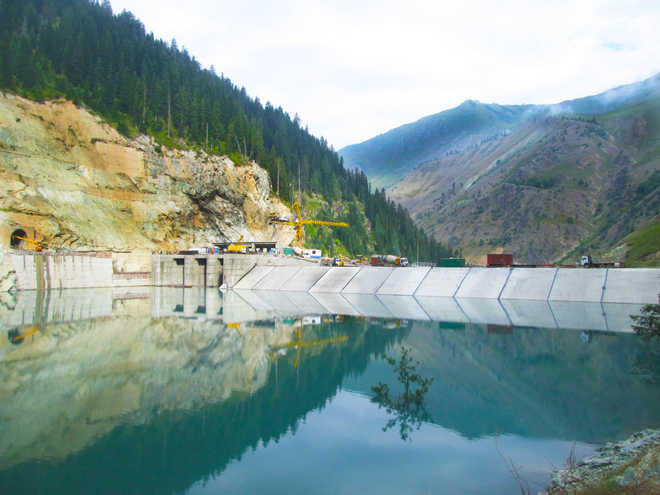
    Srinagar, Mar 18: The 330 MW Kishanganga Hydroelectric Power Station of NHPC Ltd has recorded its highest-ever cumulative power generation, crossing 1,506.52 million units (MUs) in the current financial year 2025–26, surpassing its previous best and setting a new benchmark since its commissioning in 2018.

    The milestone was achieved on the intervening night of March 17–18, when the station’s cumulative generation overtook the earlier record of 1,505.97 MUs logged in 2021–22. With around two weeks still remaining in the financial year, officials expect the figure to rise further.

    Head of Power Station and Incharge General Manager Rajesh Ranjan said the plant had already entered its highest-ever generation phase.

    “Around midnight on March 17, our cumulative generation crossed 1,506.52 million units, overtaking the previous record. With 14 days still left in the financial year, we expect this number to increase further,” he said.

    He said the current performance reflects the station’s best output since commissioning and pointed to improved operational planning and execution.

    “We are focusing on running the station at optimum efficiency while strictly maintaining safety standards. The idea has been to maximise output without compromising safety,” Ranjan said.

    He attributed the achievement to sustained coordination across teams, including planning, operations, maintenance and support units.

    “This is the result of collective effort. Our planning team, our general managers Som Nath and Arun Kumar Soni, and the powerhouse team led by Shakti Prasad Rath have all contributed. Finance and HR teams have also played an important role,” he said.

    Ranjan also acknowledged the role of contract workers and ground-level staff, saying round-the-clock work has been central to maintaining output.

    “Our teams are working 24×7, whether in operations or maintenance to ensure maximum efficiency. Contract workers, township staff and internal support teams have all put in sustained effort to achieve this result,” he said.

    Officials said the plant’s high availability during the year has helped maintain steady generation, even as hydroelectric operations in the region often face seasonal and operational constraints.

    In a statement, NHPC credited the achievement to the leadership of Chairman and Managing Director Bhupender Gupta, with technical guidance from Director Suprakash Adhikari, and support from Executive Director (Region-Jammu) Ram Swaroop and Executive Director (O&M) Indradeo Prasad Ranjan.

    Ranjan said the milestone has lifted morale within the station and set the stage for higher targets.

    “This is an important achievement for us, but also a reminder that we need to set new benchmarks going forward,” he said.

    Commissioned in 2018, the Kishanganga project is a key hydroelectric installation in north Kashmir Bandipora district and plays a significant role in meeting the region’s power demand. With the current trend, the station is set to close the financial year with its highest-ever generation.
  • Kashmir’s calligraphy icon completes 1.3 KM Handwritten Hadith series

    Kashmir’s calligraphy icon completes 1.3 KM Handwritten Hadith series

    Gurez Valley’s Mustafa presents 108-meter scroll from Al-Muwaṭṭaʾ, part of world’s longest Hadith manuscript project

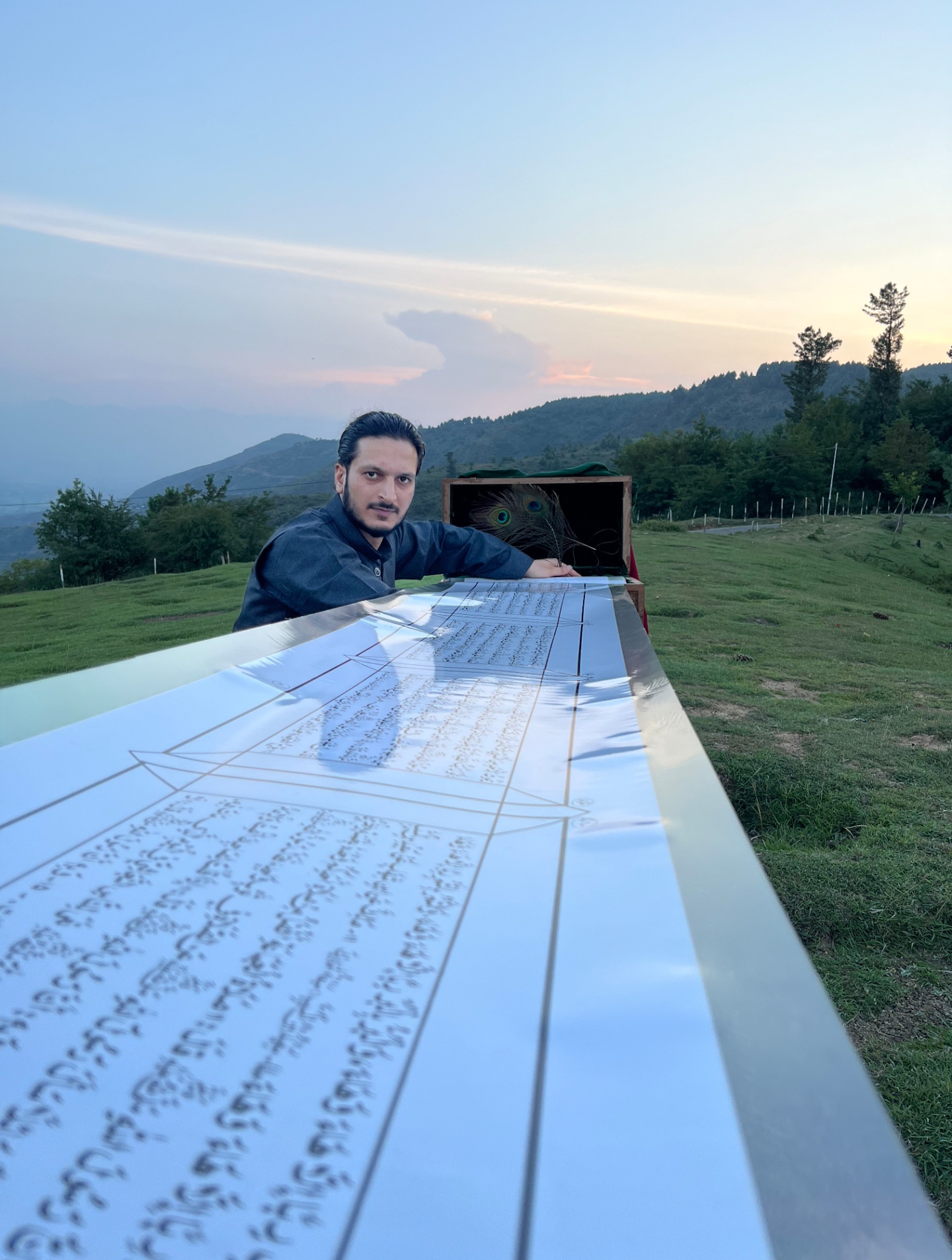
    Srinagar, Aug 5: In a rare artistic and scholarly achievement, Mustafa ibni jameel, a self-taught calligrapher from Kilshey Refugee village in Gurez valley of North Kashmir’s Bandipora district has completed what he claims to be the world’s longest handwritten Hadith compilation, spanning an extraordinary 1.3 kilometers.

    “The full 1.3 km series is complete, but not laminated yet. I’ve only presented the first 108 meters, which has been laminated and prepared for viewing,” Mustafa told Rising Kashmir. “Once the entire manuscript is laminated and archived, it will be presented in its complete form.”

    Handwritten without interruption on a 135 GSM art-grade scroll, the 108-meter segment was completed over six months, requiring daily writing sessions of 18 hours. The scroll, written in one stretch without any physical joins or cuts, measures 14.5 inches in width and is part of a paper roll he sourced from Delhi in 2022, weighing over three quintals and totaling 7 to 8 kilometers in length.

    Mustafa’s dedication to Islamic calligraphy is not new. He previously completed a 500-meter handwritten Quran, a work that received recognition from the Lincoln Book of Records. The current Hadith scroll project, too, has been formally approved by the Lincoln Board after completing the required documentation, including video evidence and witness verification.

    “This work is part of a lifelong commitment to preserving Islamic knowledge through traditional calligraphy,” he said. “Al-Muwaṭṭaʾ, one of the earliest compilations of Hadith, holds a unique place in our scholarly heritage. I chose the transmission of Ibn-e-Qasim for its structure and historical value.”

    Mustafa said he never received formal training in calligraphy but developed his skills through self-study, reading calligraphy books, PDFs, and handwritten manuscripts. By dissecting the structure of Arabic letters, he practiced the traditional rules of spacing and proportion until he was able to write extended religious texts with precision.

    “I began calligraphy just to improve my handwriting. But over time, it became a mission. I trained myself from books and notes, no YouTube, no courses, just pure focus,” he said.

    The current project, Al-Muwaṭṭaʾ scroll is only the first part of a broader fifteen-part Hadith series. Mustafa is now working on the “As-Sunan” series, which includes Sunan Abu Dawood, Sunan al-Nasa’i, Sunan Ibn Majah, and Sunan al-Tirmidhi, each of which he plans to write by hand in continuation.

    He said that these texts will be completed in multiple transmissions, and some scrolls will reach up to 500 meters in length.

    “The Al-Muwaṭṭaʾ scroll begins at 108 meters, but one of its final parts reaches 500 meters. The Sunan series will follow a similar scale,” he said.

    All of this work, from paper procurement to materials and preservation has been self-funded, with Mustafa spending nearly Rs 1 lakh on the 108-meter scroll alone, including lamination and material handling.

    Beginning his journey from remote and often overlooked corner of Kashmir, his discipline and devotion have resulted in what could soon become one of the most important private Hadith calligraphy archives in the Islamic world.

    “This is not for fame or exhibition but a service to preserve and present our heritage in a way that can last generations,” he said.