Category: Dawar

  • SDH Gurez not first referral Hospital yet, Patients still referred to Bandipora: Govt 

    SDH Gurez not first referral Hospital yet, Patients still referred to Bandipora: Govt 

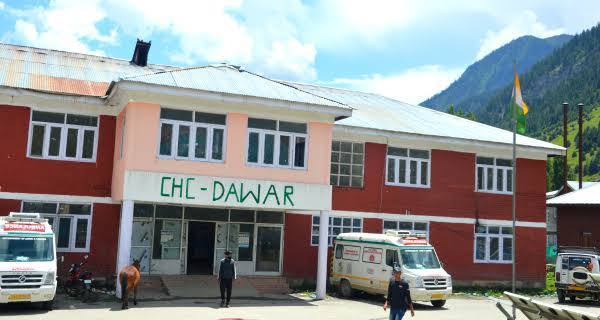
    Srinagar, Feb 10: The Jammu and Kashmir government has said that District Hospital Bandipora continues to be the designated first referral hospital for patients from the remote Gurez constituency, including those coming from the far-flung Tulail area, despite the presence of a Sub-District Hospital (SDH) at Dawar in Gurez.

    The information was shared in the Jammu and Kashmir Legislative Assembly in response to a starred question tabled by MLA Nazir Ahmad Khan.

    Replying to the question, the Health and Medical Education Department confirmed that District Hospital Bandipora functions as the official referral hospital for Gurez as per the existing healthcare referral system. 

    The government also acknowledged that patients from Tulail, which is located around 150 kilometres away, are referred to Bandipora when advanced treatment is required.

    However, the government clarified that patients from Tulail are first examined and treated at SDH Dawar, and only those cases which need specialised or advanced medical care beyond the available facilities are referred to District Hospital Bandipora, following standard referral protocols.

    The reply further stated that SDH Dawar has not yet been notified or designated as a First Referral Unit (FRU). At present, the hospital is functioning as a Sub-District Hospital and is providing primary and secondary healthcare services to the population of Gurez and Tulail within its sanctioned infrastructure, manpower and available facilities.

    On the demand to designate SDH Dawar as a first referral hospital to reduce hardship for patients, the government said that such a designation depends on the fulfilment of prescribed norms which include the availability of required specialist doctors, adequate infrastructure, essential equipment and support services, as laid down by the Ministry of Health and Family Welfare, Government of India.

    The government maintained that any health facility can be notified as a First Referral Unit only after meeting all laid-down criteria, indicating that SDH Dawar would require further strengthening before such a status can be granted.
  • Kashmir’s calligraphy icon completes 1.3 KM Handwritten Hadith series

    Kashmir’s calligraphy icon completes 1.3 KM Handwritten Hadith series

    Gurez Valley’s Mustafa presents 108-meter scroll from Al-Muwaṭṭaʾ, part of world’s longest Hadith manuscript project

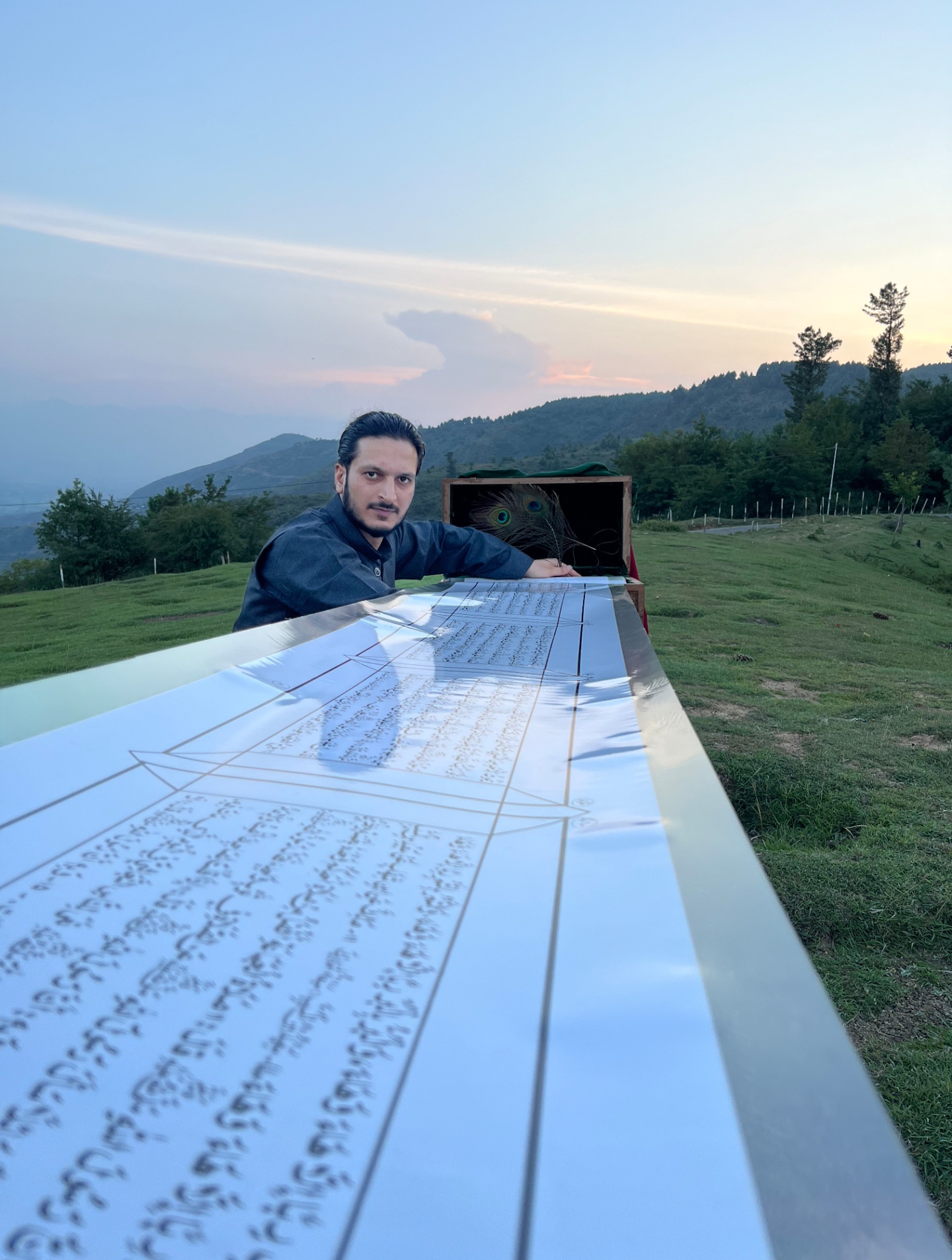
    Srinagar, Aug 5: In a rare artistic and scholarly achievement, Mustafa ibni jameel, a self-taught calligrapher from Kilshey Refugee village in Gurez valley of North Kashmir’s Bandipora district has completed what he claims to be the world’s longest handwritten Hadith compilation, spanning an extraordinary 1.3 kilometers.

    “The full 1.3 km series is complete, but not laminated yet. I’ve only presented the first 108 meters, which has been laminated and prepared for viewing,” Mustafa told Rising Kashmir. “Once the entire manuscript is laminated and archived, it will be presented in its complete form.”

    Handwritten without interruption on a 135 GSM art-grade scroll, the 108-meter segment was completed over six months, requiring daily writing sessions of 18 hours. The scroll, written in one stretch without any physical joins or cuts, measures 14.5 inches in width and is part of a paper roll he sourced from Delhi in 2022, weighing over three quintals and totaling 7 to 8 kilometers in length.

    Mustafa’s dedication to Islamic calligraphy is not new. He previously completed a 500-meter handwritten Quran, a work that received recognition from the Lincoln Book of Records. The current Hadith scroll project, too, has been formally approved by the Lincoln Board after completing the required documentation, including video evidence and witness verification.

    “This work is part of a lifelong commitment to preserving Islamic knowledge through traditional calligraphy,” he said. “Al-Muwaṭṭaʾ, one of the earliest compilations of Hadith, holds a unique place in our scholarly heritage. I chose the transmission of Ibn-e-Qasim for its structure and historical value.”

    Mustafa said he never received formal training in calligraphy but developed his skills through self-study, reading calligraphy books, PDFs, and handwritten manuscripts. By dissecting the structure of Arabic letters, he practiced the traditional rules of spacing and proportion until he was able to write extended religious texts with precision.

    “I began calligraphy just to improve my handwriting. But over time, it became a mission. I trained myself from books and notes, no YouTube, no courses, just pure focus,” he said.

    The current project, Al-Muwaṭṭaʾ scroll is only the first part of a broader fifteen-part Hadith series. Mustafa is now working on the “As-Sunan” series, which includes Sunan Abu Dawood, Sunan al-Nasa’i, Sunan Ibn Majah, and Sunan al-Tirmidhi, each of which he plans to write by hand in continuation.

    He said that these texts will be completed in multiple transmissions, and some scrolls will reach up to 500 meters in length.

    “The Al-Muwaṭṭaʾ scroll begins at 108 meters, but one of its final parts reaches 500 meters. The Sunan series will follow a similar scale,” he said.

    All of this work, from paper procurement to materials and preservation has been self-funded, with Mustafa spending nearly Rs 1 lakh on the 108-meter scroll alone, including lamination and material handling.

    Beginning his journey from remote and often overlooked corner of Kashmir, his discipline and devotion have resulted in what could soon become one of the most important private Hadith calligraphy archives in the Islamic world.

    “This is not for fame or exhibition but a service to preserve and present our heritage in a way that can last generations,” he said.