Category: Ground Report

  • Kashmir’s calligraphy icon completes 1.3 KM Handwritten Hadith series

    Kashmir’s calligraphy icon completes 1.3 KM Handwritten Hadith series

    Gurez Valley’s Mustafa presents 108-meter scroll from Al-Muwaṭṭaʾ, part of world’s longest Hadith manuscript project

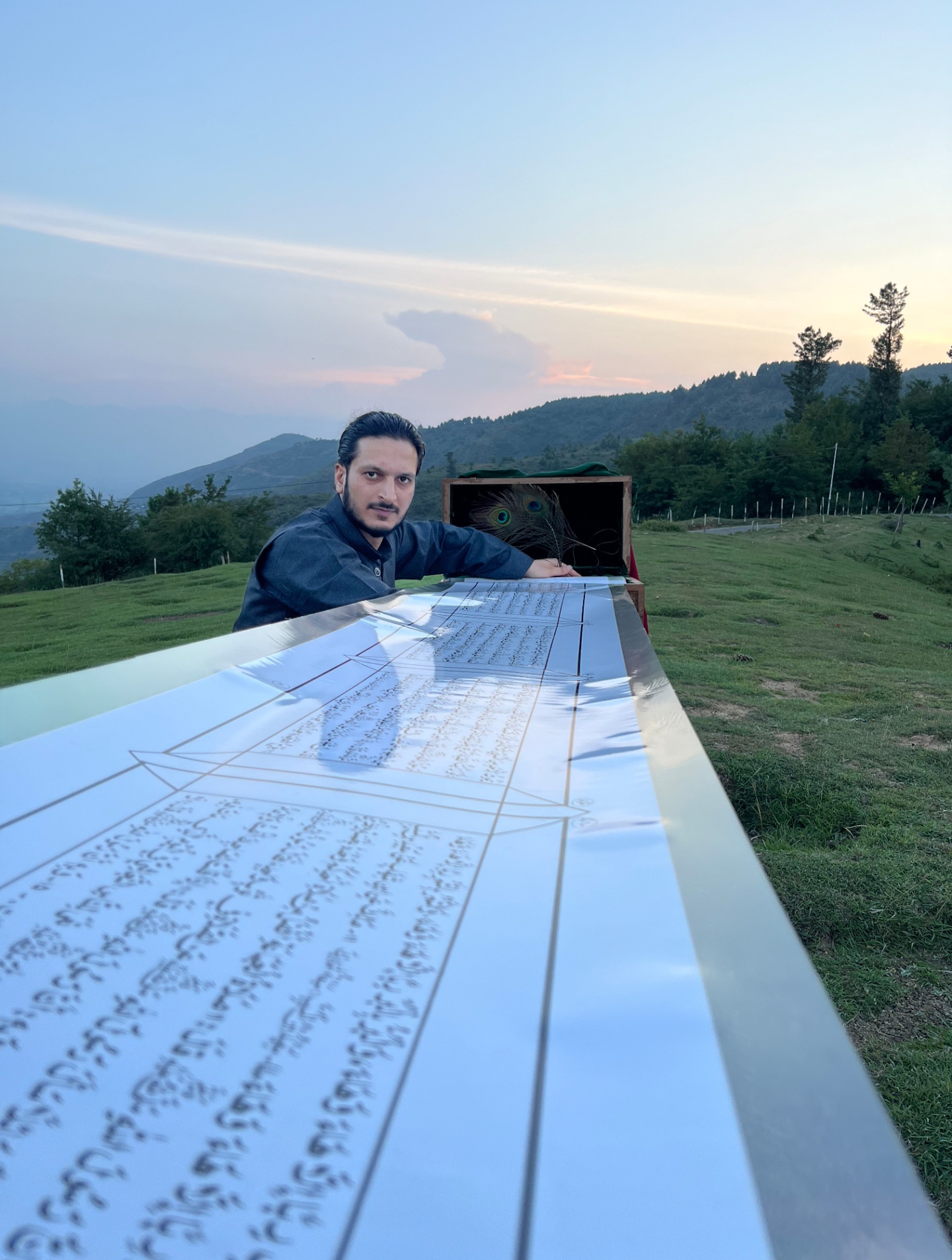
    Srinagar, Aug 5: In a rare artistic and scholarly achievement, Mustafa ibni jameel, a self-taught calligrapher from Kilshey Refugee village in Gurez valley of North Kashmir’s Bandipora district has completed what he claims to be the world’s longest handwritten Hadith compilation, spanning an extraordinary 1.3 kilometers.

    “The full 1.3 km series is complete, but not laminated yet. I’ve only presented the first 108 meters, which has been laminated and prepared for viewing,” Mustafa told Rising Kashmir. “Once the entire manuscript is laminated and archived, it will be presented in its complete form.”

    Handwritten without interruption on a 135 GSM art-grade scroll, the 108-meter segment was completed over six months, requiring daily writing sessions of 18 hours. The scroll, written in one stretch without any physical joins or cuts, measures 14.5 inches in width and is part of a paper roll he sourced from Delhi in 2022, weighing over three quintals and totaling 7 to 8 kilometers in length.

    Mustafa’s dedication to Islamic calligraphy is not new. He previously completed a 500-meter handwritten Quran, a work that received recognition from the Lincoln Book of Records. The current Hadith scroll project, too, has been formally approved by the Lincoln Board after completing the required documentation, including video evidence and witness verification.

    “This work is part of a lifelong commitment to preserving Islamic knowledge through traditional calligraphy,” he said. “Al-Muwaṭṭaʾ, one of the earliest compilations of Hadith, holds a unique place in our scholarly heritage. I chose the transmission of Ibn-e-Qasim for its structure and historical value.”

    Mustafa said he never received formal training in calligraphy but developed his skills through self-study, reading calligraphy books, PDFs, and handwritten manuscripts. By dissecting the structure of Arabic letters, he practiced the traditional rules of spacing and proportion until he was able to write extended religious texts with precision.

    “I began calligraphy just to improve my handwriting. But over time, it became a mission. I trained myself from books and notes, no YouTube, no courses, just pure focus,” he said.

    The current project, Al-Muwaṭṭaʾ scroll is only the first part of a broader fifteen-part Hadith series. Mustafa is now working on the “As-Sunan” series, which includes Sunan Abu Dawood, Sunan al-Nasa’i, Sunan Ibn Majah, and Sunan al-Tirmidhi, each of which he plans to write by hand in continuation.

    He said that these texts will be completed in multiple transmissions, and some scrolls will reach up to 500 meters in length.

    “The Al-Muwaṭṭaʾ scroll begins at 108 meters, but one of its final parts reaches 500 meters. The Sunan series will follow a similar scale,” he said.

    All of this work, from paper procurement to materials and preservation has been self-funded, with Mustafa spending nearly Rs 1 lakh on the 108-meter scroll alone, including lamination and material handling.

    Beginning his journey from remote and often overlooked corner of Kashmir, his discipline and devotion have resulted in what could soon become one of the most important private Hadith calligraphy archives in the Islamic world.

    “This is not for fame or exhibition but a service to preserve and present our heritage in a way that can last generations,” he said.
  • Lotus Blooms in Wular Lake after 25 Years

    Lotus Blooms in Wular Lake after 25 Years

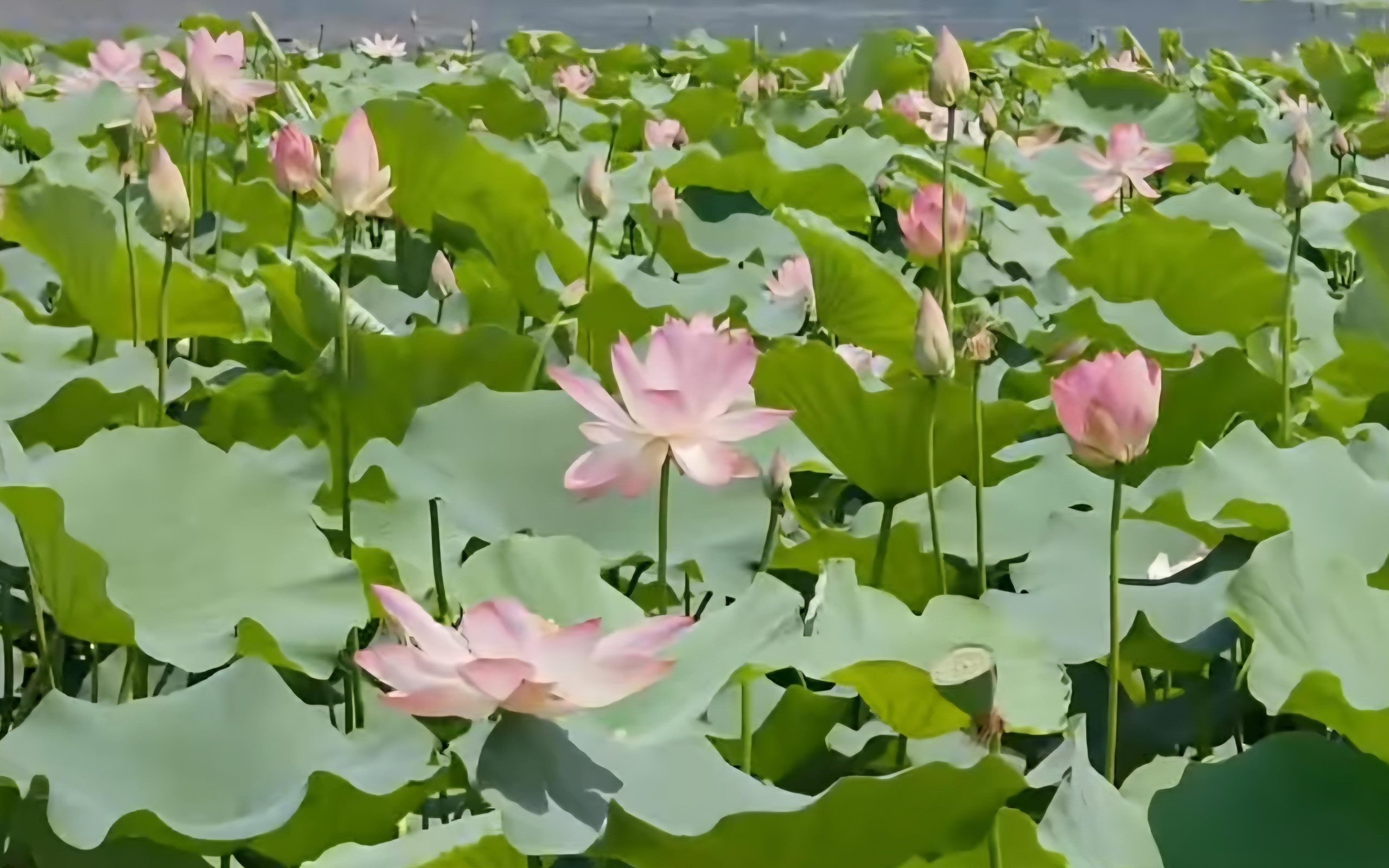
    Bandipora, July 9: The Wular Lake in North Kashmir has witnessed the blooming of lotus flowers, locally known as “Nadru”, after a gap of nearly 25 years, a milestone in the lake’s ongoing restoration efforts.

    The rare sight of vibrant lotus blooms was spotted in the waters of Wular, one of Asia’s largest freshwater lakes, located in Bandipora district.

    An Official from the Wular Conservation and Management Authority while confirming the development, attributed the return of Nadru to sustained dredging operations and ecological restoration measures taken over the past few years.

    “The revival of Nadru in Wular is the result of large-scale dredging and de-siltation that helped clear years of accumulated soil and organic debris,” the WUCMA official added. “The department also undertook controlled sowing of Nadru seeds, about 20 to 30 percent of what naturally occurs to support regrowth.”

    For nearly three decades, Wular Lake faced severe ecological stress due to unchecked siltation, pollution, and encroachments. The excessive deposition of soil and organic waste blocked sunlight penetration in the waterbed, disturbing the aquatic ecosystem and halting the natural growth of water plants like lotus.

    Human activities such as illegal construction, sand extraction, and unregulated agricultural runoff also damaged the lake’s health. By the early 2000s, the lake had significantly shrunk in size and lost much of its natural biodiversity, including the seasonal bloom of Nadru.

    WUCMA, under the aegis of the Jammu and Kashmir Government, launched a conservation plan for Wular, which included dredging clogged channels, removing silt, curbing encroachments, and replanting native aquatic vegetation. These efforts, intensified in the last 3-4 years have led to improved water quality and ecological restoration.

    “We observed early signs of Nadru growth last year, but this season has shown a more promising bloom,” rhe official said. “This is not just an ecological success but also an economic opportunity for local communities,” he added.

    The official further said that the blooming of lotus in Wular is more than just an aesthetic sight as it is expected to rejuvenate the local economy.

    Nadru is a popular delicacy in Kashmiri cuisine and sells for Rs 250 to 300 per kilogram in local markets, he said adding that its return offers fresh hope for scores of families living around Wular who rely on seasonal lake produce for livelihood.

    Local residents residing around the wular lake have welcomed the development with enthusiasm, seeing it as both a return of natural beauty and a path to improved earnings. 

    They said that the blooming of Nadru is a key indicator of improving lake health and biodiversity. Continued conservation efforts, they say, will be crucial to ensure that such ecological recoveries are sustained.

    Wular, one of the largest freshwater lakes in South Asia, fed mainly by the Jhelum River. Designated as a wetland of international importance under the Ramsar Convention, it plays a vital role in flood control, water purification, and biodiversity conservation in the Kashmir Valley.

    Over the years, however, Wular had come under threat due to rampant siltation, encroachments, and lack of management. The recent revival of Nadru signals a possible turning point in the lake’s fragile ecological journey.